The technical improvement of a kayaker relies, among other things, on the athlete’s level of understanding of the coach’s verbal messages. It is common for the coach to overestimate the athlete’s level of interpretation of his instructions. How many times have we coaches given some thought to whether our messages are made clear enough to our athletes? The success of a technical task often depends not so much on the athlete’s more or less positive attitude as on how clear the coach’s message is to him. It is not that the athlete does not want to do what is asked of him; the problem is that he does not know what we want from him as he has not understood the message.
Therefore, assuming that the coach and his mentee understand the technical model to be applied, the next step to make a technical improvement possible is the adequate selection of technical tasks or exercises, ensuring that an appropriate level of communication is established between the two interlocutors: coach and athlete. And for two interlocutors to understand each other there are several conditions to be dealt with. For example, if athlete and coach have different intellectual and linguistic capacities, it is the coach who has to accommodate his phrasing to the athlete’s level of comprehension. That will contribute to a greater chance of success in the technical exercise proposed. It will also increase the likelihood for the athlete to experience that success, as a result of performing the task correctly and gaining satisfaction from it.
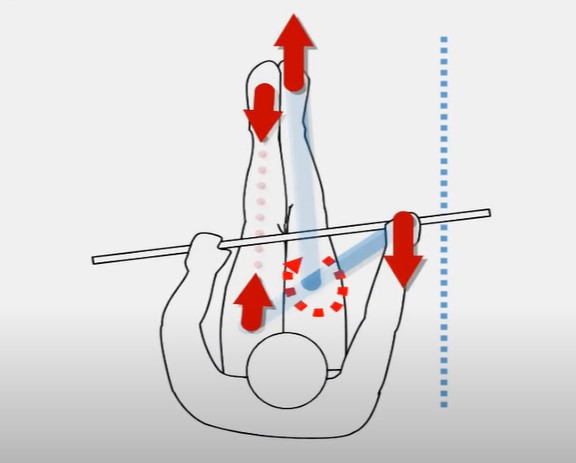
There is one more factor that I would like to introduce that contributes significantly to the athlete experiencing success and satisfaction during technical sessions. This is a methodological aspect of sprint canoeing technique training sessions. It is about tasks involving connections. A young kayaker does not develop the same level of technical progression when we use analytical messages that are dissociated from the technique as when we use the connections of two or more simultaneous actions in the same phase of a stroke cycle. Let’s look at a few examples:
- Insisting only on the action of rotating the trunk is not the same as connecting the start of the trunk rotation with the start of the aerial catch.
- Insisting only on the extraction of the blade from the water is not the same as connecting the end of the trunk rotation with the end of the water phase of the stroke.
- Insisting only on the forward catch of the blade is not the same as connecting the start of the aerial catch with the pressure exerted on the footrest by the foot on the stroke side.
- Insisting only on trunk rotation in one block is not the same as connecting the speed at which the four basic joints on the rotation side (hip, shoulder, elbow and wrist) move forward.
- Insisting only on not pushing up or down with the rotation hand is not the same as connecting the start and the end of the trunk rotation with the shifting of the rotation hand at the same height.
- Insisting only on locking the blade in the water is not the same as connecting the height at which the hand shifts on the rotation side with the course of the blade in the water, so that it is always hooked during the water phase.
- Insisting only on the amplitude of the trunk rotation is not the same as connecting the long trajectory of the trunk rotation with the progressive acceleration of the trunk in this movement.
- Catching the water hard is not the same as connecting the start of the aerial catch and the extraction of the blade from the water with the progressive acceleration of this action.
- Insisting on not pushing with the rotation arm is not the same as connecting the locking of the blade in the water with the hip pivoting on the hand of the rotation side, gripped on the shaft.
- Insisting only on rotating widely is not the same as connecting the shoulders diameter with the hips diameter from the start to the end of the rotation.
- Just avoiding pulling with the arm on the stroke side is not the same as connecting the grip feeling aroused by the blade in the water, from the beginning to the end of the water phase of the stroke.
- Insisting only on a wide hip rotation is not the same as connecting the pulling force of the instep on the foot strap on the rotation side with the hip rotation until the setup.
Carlos M. Prendes Gª-Barrosa.
Genk, 29-12-2023.


 Una pica en Flandes